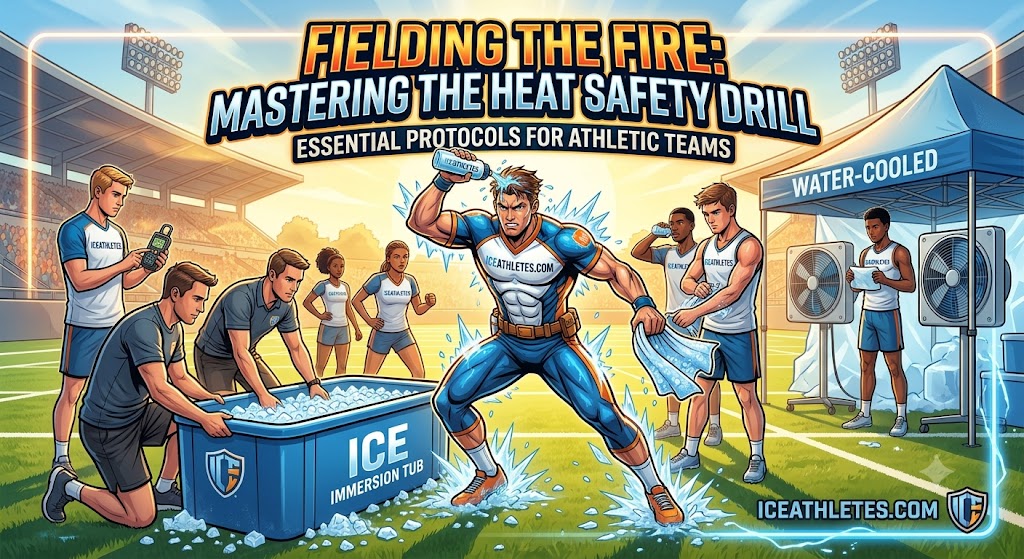
Most athletic departments have an Emergency Action Plan (EAP) sitting in a binder on a bookshelf or stored digitally in an admin folder. But an EAP on paper does not save a life during an Exertional Heat Stroke (EHS) emergency—an actionable, rehearsed drill does.
When an athlete experiences EHS, their brain temperature is actively cooking. You have less than 30 minutes to lower their core temperature below 102°F to guarantee a 100% survival rate. If your coaching staff hasn’t physically rehearsed a heat collapse drill before the first day of practice, your EAP is incomplete.
The 4 Mandatory Components of a Heat-Specific EAP
A general cardiac or injury EAP is insufficient for heat stroke because EHS requires on-site treatment before emergency medical services (EMS) transport. Ensure your athletic EAP includes these four non-negotiable elements:
- Designated Roles and Hand-offs: Who calls 911? Who grabs the ice tub? Who directs the ambulance to the exact gate? Who monitors core temperature? Roles must be assigned by title, not generic volunteer assumptions.
- Dedicated On-Site Cold Water Immersion (CWI): Tubs must be set up, filled with water, and stocked with ice prior to every practice—not sitting empty in an equipment shed 10 minutes away.
- Explicit “Cool First, Transport Second” Directive: The EAP must explicitly mandate that EMS will not transport the athlete until aggressive on-site cooling has lowered the athlete’s body temperature, or until medical staff deems transport safe.
- Venue-Specific GPS & Access Routes: Emergency dispatchers need exact gate entry points for field complexes. A delay at a locked fence or wrong stadium entrance can consume precious minutes of the Golden Hour.
[Collapse Recognized] ➔ [Call 911 & Direct to Gate] ➔ [Strip Gear / Begin CWI Submersion] ➔ [Cool to <102°F] ➔ [EMS Transport]
Conducting the Pre-Season “Heat Drill”
Just as schools practice fire drills and active shooter responses, athletic departments should conduct an annual Pre-Season EHS Rehearsal with coaches, local EMS, and sports medicine teams.
Step-by-Step Drill Walkthrough:
- Simulate a Collapse: Drop a dummy or volunteer in full gear at the furthest corner of the practice field.
- Timer Start: Time how long it takes to recognize CNS dysfunction, retrieve equipment, strip the athlete, and submerge them in the CWI tub.
- Test Water Supply & Ice Reserves: Verify you have access to enough ice (typically 40–60 lbs per tub) to maintain a water temperature between 35°F and 59°F.
- Establish Communication with Local EMS: Ensure local paramedics understand your program’s “Cool First” protocol so there is no dispute on the field about delaying transport to complete life-saving immersion.
The Takeaway: When adrenaline strikes, people don’t rise to the occasion—they fall to the level of their training. Rehearse your heat emergency response before the first heat wave arrives.