On a blistering summer morning in Bunnell, Florida, Stacy Mitchell arrived at football practice at Flagler Palm Coast High School feeling off.
“Normally, if I’m not feeling good, I’ll stay home, but that day I pushed myself,” Mitchell, a 17-year-old senior defensive lineman, recalled.
That decision nearly cost him his life. What started as a tough morning workout quickly spiraled into a life-threatening medical emergency. After pushing through intense drills in the Florida heat, Mitchell made it to the locker room—and collapsed, unable to move.
“I sat there for maybe five to 10 minutes before they took me to the training room,” Mitchell said.
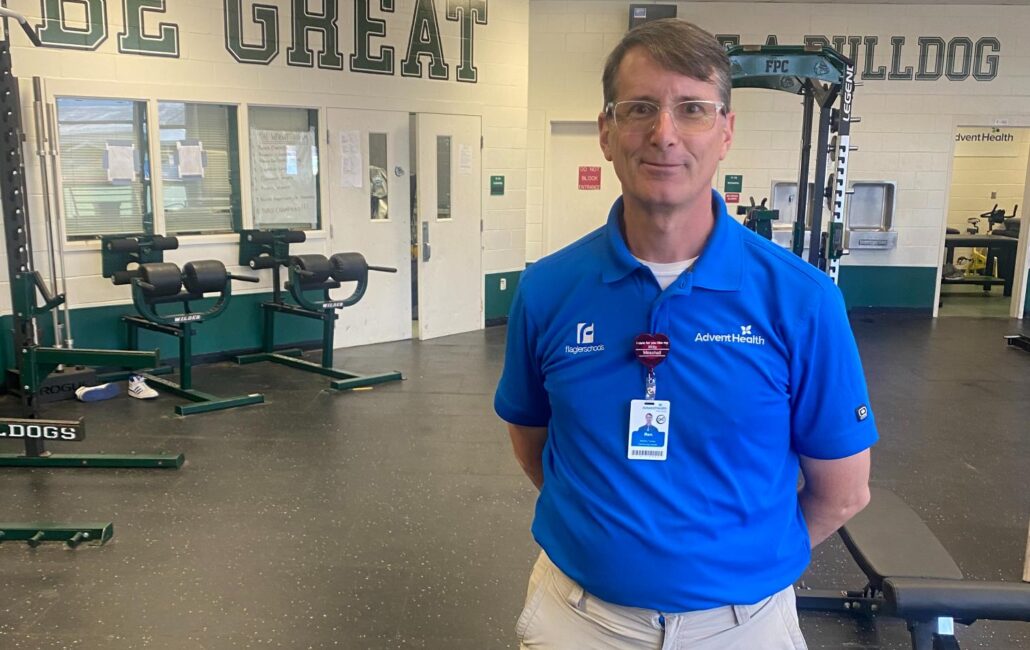
Recognizing the severity of the situation, two coaches rushed to find AdventHealth head athletic trainer Ron Steinwehr. “Mr. Ron, Stacy’s down. He needs your help.”
A Race Against the Clock: The “Cool First” Mandate
When Steinwehr reached Mitchell, he immediately recognized the signs of Exertional Heat Stroke (EHS). Every second mattered.
“Part of our policies with AdventHealth and Flagler County Schools is that we cool first, then transport second,” Steinwehr explained.
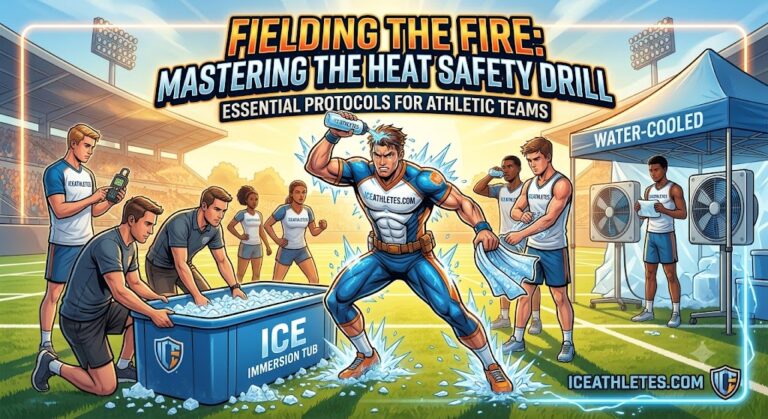
Instead of waiting for an ambulance to arrive, Steinwehr and the coaching staff jumped into action. They immediately placed Mitchell into a cold-water immersion tub on site—the single most effective intervention for severe hyperthermia—and wrapped ice-cold towels around his neck and face while continuously monitoring his vital signs.
By the time emergency medical services arrived, the rapid-cooling protocol had stabilized Mitchell’s body temperature. He was transported for additional care and made a full recovery, but his story serves as a stark reminder of how fast extreme heat can overpower even elite athletes.
“You’d think athletes could handle the heat the most,” Steinwehr noted. “Unfortunately, environmental risks are unpredictable, and I always have to stay on high alert.”
Beyond Hydration: Tracking the Science of Heat Safety
Preventing heat illness requires more than just pushing water bottles on the sidelines—it requires real-time data. To protect student-athletes, Steinwehr relies on a Wet Bulb Globe Thermometer (WBGT).
Unlike a standard thermometer, a WBGT measures a combination of ambient temperature, humidity, wind speed, sun angle, and cloud cover to calculate true heat stress on the human body.
“It’s the gold standard in measuring heat stress here in Florida,” Steinwehr explained. “When the WBGT reading goes above 92°F, athletes can’t practice outside. It’s too dangerous.”
When conditions hit that critical threshold, athletic trainers enforce mandatory modifications, moving practices indoors or altering workout duration to keep players safe.
Education, Prevention, and Community Support
For Steinwehr, prevention starts long before players step onto the field.
“We educate them about heat-related illnesses and remind them constantly to hydrate, eat properly, and listen to their bodies,” he said.
This level of proactive care is made possible through a formal partnership between AdventHealth and Flagler County Schools. Established in 2021, the $750,000 commitment from AdventHealth supports student athlete care, mental health resources, and career pathways for graduates. As part of this safety initiative, AdventHealth also provides free annual sports physicals and ECG screenings for 6th through 12th-grade students to ensure they are medically cleared for competition.
Stacy Mitchell’s story ended in recovery because a team knew the signs, had the right equipment on hand, and executed rapid cooling without delay. As heat safety protocols continue to evolve, his experience highlights a universal truth for every coach, trainer, and athlete: when heat stroke strikes, immediate cooling saves lives.