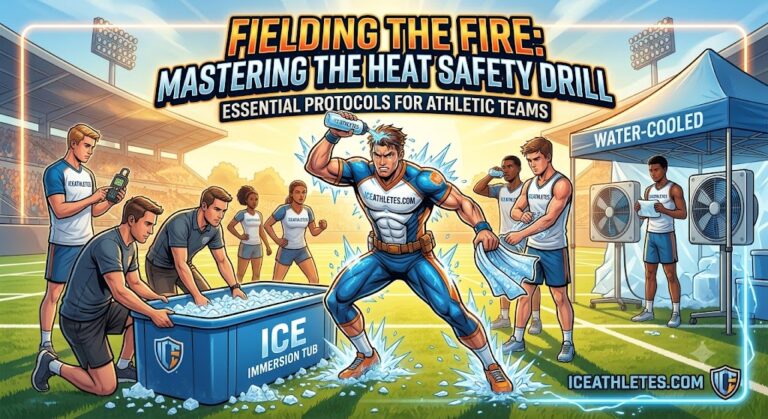

Summer training sessions and early fall games push athletes to their limits. But when the temperature rises, so does the risk of heat-related illnesses. For athletes, coaches, and parents, understanding heat safety isn’t just about comfort—it is a critical component of sports survival and peak performance. At Ice Athletes, we believe that staying cool is the ultimate competitive advantage.
The Danger Zone: Heat Exhaustion vs. Heat Stroke The first step in heat safety is recognizing the warning signs. Heat-related illnesses exist on a spectrum, primarily categorized into heat exhaustion and the far more dangerous heat stroke.
Heat exhaustion is characterized by heavy sweating, weakness, cold or clammy skin, a fast but weak pulse, and nausea. If an athlete exhibits these signs, they must immediately move to a cooler environment, sip water, and apply cool, wet cloths to their body.
Heat stroke, however, is a severe medical emergency. It occurs when the body can no longer control its temperature. Symptoms include a dangerously high body temperature (above 103°F), hot and dry skin (sweating may stop completely), confusion, and potentially unconsciousness. If heat stroke is suspected, call 911 immediately and begin aggressive cooling measures, such as an ice bath, while waiting for medical professionals.
Acclimatization: The 14-Day Rule You cannot step out of an air-conditioned room into 95-degree heat and expect your body to perform perfectly. Acclimatization is the process of gradually increasing the intensity and duration of exercise in the heat over a period of 10 to 14 days. This allows the body to adapt by increasing sweat production and improving blood flow to the skin, which naturally cools the body more efficiently.
Proactive Cooling Strategies Don’t wait until you are overheating to start cooling down.
- Pre-Cooling: Using ice vests or consuming cold slushies before an event can lower your core temperature, giving you a larger buffer before you overheat.
- During Play: Utilize cold towels soaked in ice water on the neck, armpits, and groin during breaks.
- Post-Game: Ice baths are a staple for recovery, helping to rapidly bring down core temperatures and reduce muscle inflammation.
Listen to Your Body No game is worth your life. Pushing through the heat when you feel dizzy or nauseous is not a badge of honor; it is a dangerous gamble. Stay cool, stay vigilant, and remember that a smart athlete knows when to take a break.